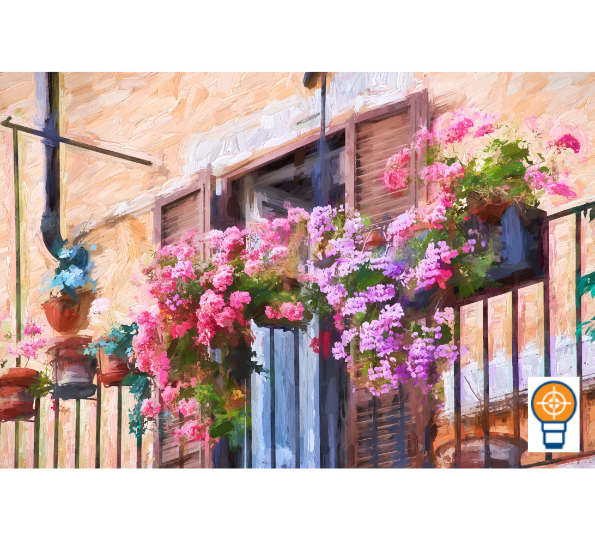
The 2026 Impressionist Movement: radical, but not as radical as the late 1800s original.
A word with three quite different origins.
In the world of LinkedIn, an impression is defined as the number of times our content is at least 50% in view for at least 300 milliseconds on a signed-in member’s device screen or browser window. In other words, whenever our content shows up on a screen, that’s an impression. A technical metric, precisely measured, endlessly discussed.
In the wider world, one of the definitions of an impression is the effect produced by impressing; an especially marked and often favourable influence on feeling, sense, or mind. The kind that lasts. The kind that changes how someone thinks about something.
And then, of course, there is the art of mimicking the voice and mannerisms of others for comedic effect.
My post today isn’t intended to be a comedy script. Although…
The original Impressionists #
Before we get to LinkedIn metrics and the question of whether we should be obsessed by them, it’s worth spending a moment with the movement that gave this piece its title because the original Impressionists have rather a lot to teach content creators about creating work regardless of immediate reception.
On April 15, 1874, thirty artists who had joined forces as the Société Anonyme des Artistes opened an independent exhibition at 35 Boulevard des Capucines in Paris. They included Monet, Renoir, Pissarro, and Degas. Their show challenged the authority of the French Academy of the Fine Arts, whose annual Salon had long been indispensable for launching and maintaining a successful career in painting. The Academy had rejected their work as too experimental, too unconventional, too indifferent to the established rules of what art was supposed to look like.
So, they held their own exhibition instead.
The term “Impressionist” was first used as an insult, coined by critic Louis Leroy in response to the show. He intended it to be dismissive; the work was unfinished, he argued, merely impressionistic rather than properly executed. The artists adopted the label anyway, with characteristic defiance. Although attracting around 3,500 visitors and generating some sales, the exhibition received harsh criticism and was not initially considered a success.
Today, Impressionism is one of the most recognisable and beloved art movements in history. The critics who dismissed it are remembered, if at all, as cautionary examples of establishment blindness. The painters who kept going anyway; who created work they believed in, regardless of immediate reception, changed the trajectory of modern art.
The metric of the moment told them they had failed. History told a different story.
The LinkedIn impression and its limitations #
Which brings us back to the 300 milliseconds.
The LinkedIn impression metric is useful as far as it goes. It tells you that your content appeared on a screen. It tells you nothing about whether it was read, understood, felt, or remembered. It tells you nothing about the person who saw it, paused on it for a moment without liking or commenting, and carried something from it into a conversation three weeks later.
The question worth asking is not “how many impressions did this post generate?” but “what kind of impression did it leave?”
These are genuinely different questions and mixing them leads to a particular kind of content anxiety that is both common and counterproductive. The anxiety that manifests as posting for the algorithm rather than the reader. As optimising for engagement signals rather than genuine usefulness. As measuring the work by the response it generates in the first 24 hours, when the most valuable responses; the ones that eventually produce a phone call, a referral, a new relationship, may arrive weeks or months later, quietly and without a notification.
The silent majority #
Some readers will openly like, comment, and share what we write. But there will be a significant and silent majority who do not express an opinion, even if they are entertained, informed, or genuinely helped by what we write.
This silent majority is not indifferent. They are reading, thinking, and sometimes acting, just not in ways that show up in the metrics. The person who reads a post about follow-up discipline and quietly changes how they approach their pipeline. The prospect who reads three months of content from someone they’ve never spoken to and concludes, on the basis of that reading, that this is someone worth speaking to. The former client who reads a piece about data hygiene and forwards it to a colleague with the words “this reminds me of someone worth calling.”
None of those actions generate a LinkedIn notification. All of them are the work doing exactly what it was supposed to do.
To me, both audiences: the visible engagers and the silent majority, are equally important and deserve to be treated with the same reverence. The silent majority is not a failed audience. It is the audience doing its thinking in private, as audiences have always done.
What we write for #
The benefits of writing, for both the writer and their audience, run considerably deeper than the impression count suggests.
For the audience, we seek to entertain, to inform, to build knowledge and perspective. For the writer, the benefits are equally real: the cathartic release of putting something difficult into words, the clarification of beliefs and ways of working that comes from having to articulate them clearly, the satisfaction of getting something off our chests that we think needs to be said.
The Impressionists found opportunities for liberation in gathering to discuss their ideas and changed not just how they painted but how they thought about what painting was for. The act of creation shaped the creator as much as it shaped the work. That is as true for a LinkedIn post as it is for a canvas painted en plein air on the banks of the Seine.
Write because you have something to say. Write to leave a lasting impression, not a 300-millisecond one, but the kind that changes how a reader thinks about something that matters to them. Write for the likers and the sharers, yes, but write equally for the silent majority who will never tell you what your work meant to them, and who are reading it carefully anyway.
Focus attention on good writing, and it will be seen by those who are open to it — whether they are likers, sharers, or just plain impressionists.
Write for likes. And write to leave a lasting impression.
Thank you for reading.
Author: Richard Bull-Domican, founder of New Era Financial Introductions, a B2B lead generation consultancy with over twenty years of experience. The perspectives shared here come from two decades in the field; not theory, but practice.
I create small, digestible guides on Gumroad for business owners who hate aggressive tactics and prefer relationship-led approaches. New resources are added regularly. For longer reads on lead generation and the human side of sales, follow me on Medium and join the daily conversation on LinkedIn.
Gumroad: https://richardbulldomican.gumroad.com/
Medium: https://medium.com/@richard-bulldomican
LinkedIn: https://www.linkedin.com/in/richardbulldomican/